Written By: Jodi Rambo
Growing up in Sault Ste. Marie, the tragedy of the Edmund Fitzgerald was a familiar topic of conversation. Every November, the story would come up again, although, come to think of it, it was something people talked about throughout the year.
I have a distinct childhood memory of our elderly neighbor, who, along with his wife, had become something like an extra set of grandparents to my brother and me. He had spent part of his life working aboard Great Lakes freighters, and I remember him telling me a story about the night the Edmund Fitzgerald sank.
As I remember it, he was aboard another freighter on Lake Superior that November night. He recalled hearing over the radio that the Arthur M. Anderson was going back to search for the Fitzgerald, but the conditions were too dangerous for his own ship to join the search. I even remember him mentioning that he had seen the Fitzgerald’s lights at some point.
Now, here’s the thing: I was very young when he told me this, and no one else in my family remembers the conversation. He’s since passed away, so I can’t ask him about it. I’ve done a little digging into the ships he worked aboard, but I haven’t been able to confirm whether he was on Lake Superior that night. Maybe I’m remembering a real experience he shared. Maybe I’ve mixed together pieces of different stories over the years. Either way, that childhood memory has stuck with me.
And it got me thinking about perspective. Most of us know the story of the Edmund Fitzgerald. We know about the storm, the ship, and the 29 men who never made it home. But sometimes, hearing the same facts over and over makes it difficult to grasp what they really mean. So rather than retelling the final voyage, I wanted to look at a few familiar facts about the Fitzgerald in a different way. Just how big was this ship? How deep is the wreck? And what does the distance from Whitefish Bay actually look like when we compare it to places we know?
How Big Was the Fitz:
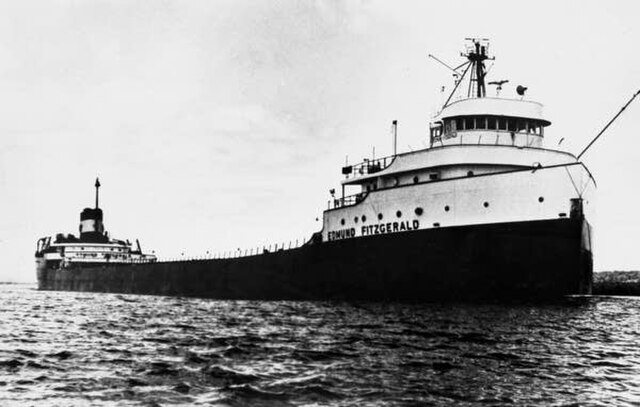
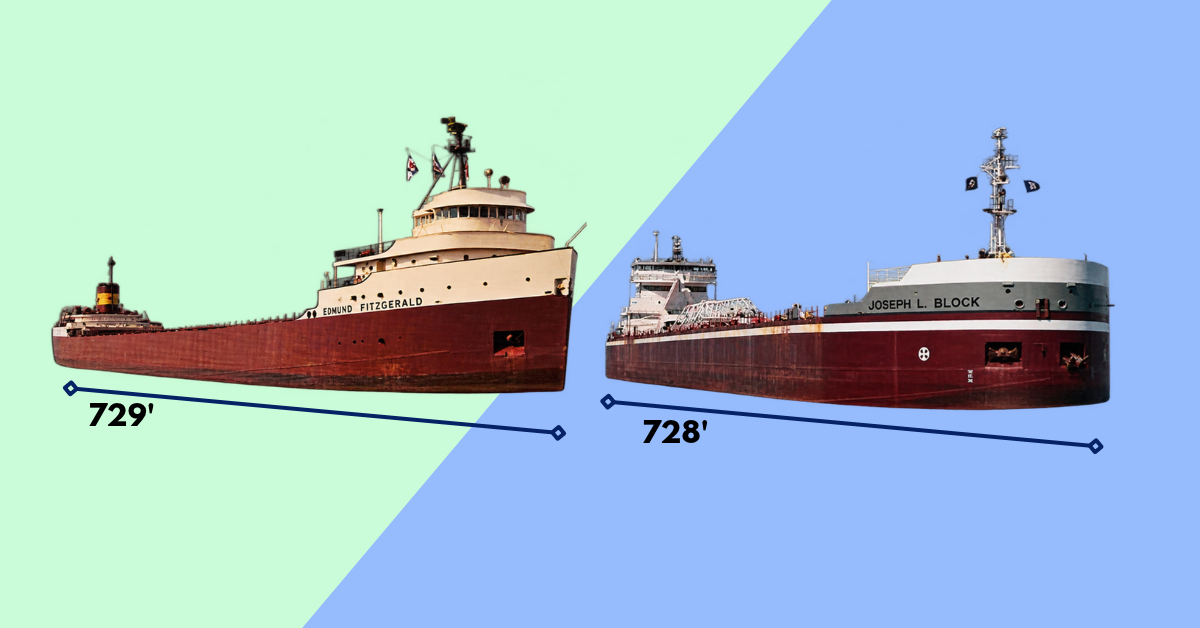
When launched in June 1958, the Edmund Fitzgerald measured 729 feet in length and was the largest freighter ever on the Great Lakes.
If you’ve ever seen the Joseph L. Block, you’ve seen a ship nearly the same length as the Fitzgerald. Although they’re built quite differently, the Block measures 728 feet long, just one foot shorter!
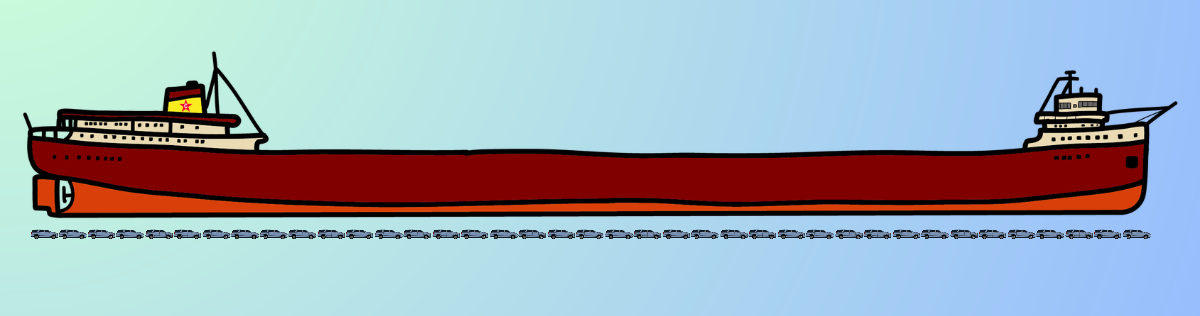
Now, if you haven’t seen the Block in person, imagine lining up nearly 39 Chevrolet Suburbans bumper-to-bumper. That’s roughly the length of one ship!
How Deep Is the Wreck:
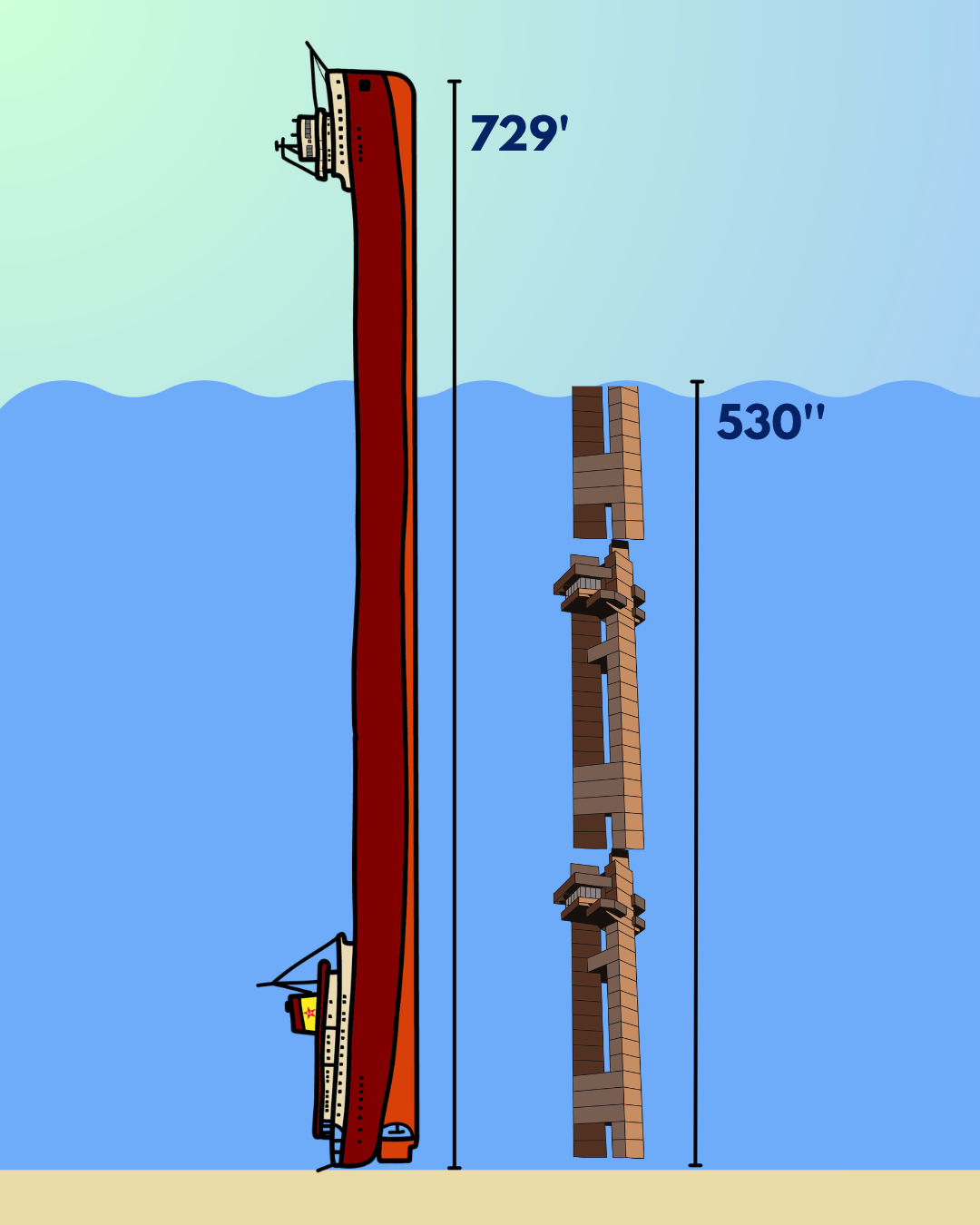
Exactly what happened to the Edmund Fitzgerald that November night remains a mystery, with several theories surrounding what caused her to sink. Today, the wreck rests in two main sections approximately 530 feet below Lake Superior’s surface. That’s not even as deep as the ship was long from stern to bow, which is especially mind-blowing to me!
I can’t tell you exactly how she got there, but I can tell you that the wreck rests at a depth equivalent to stacking Sault Ste. Marie’s Tower of History on top of itself about 2½ times. If you’ve ever stood at the foot of the Tower and looked up, you know just how deep that really is.
How Far From Safety:
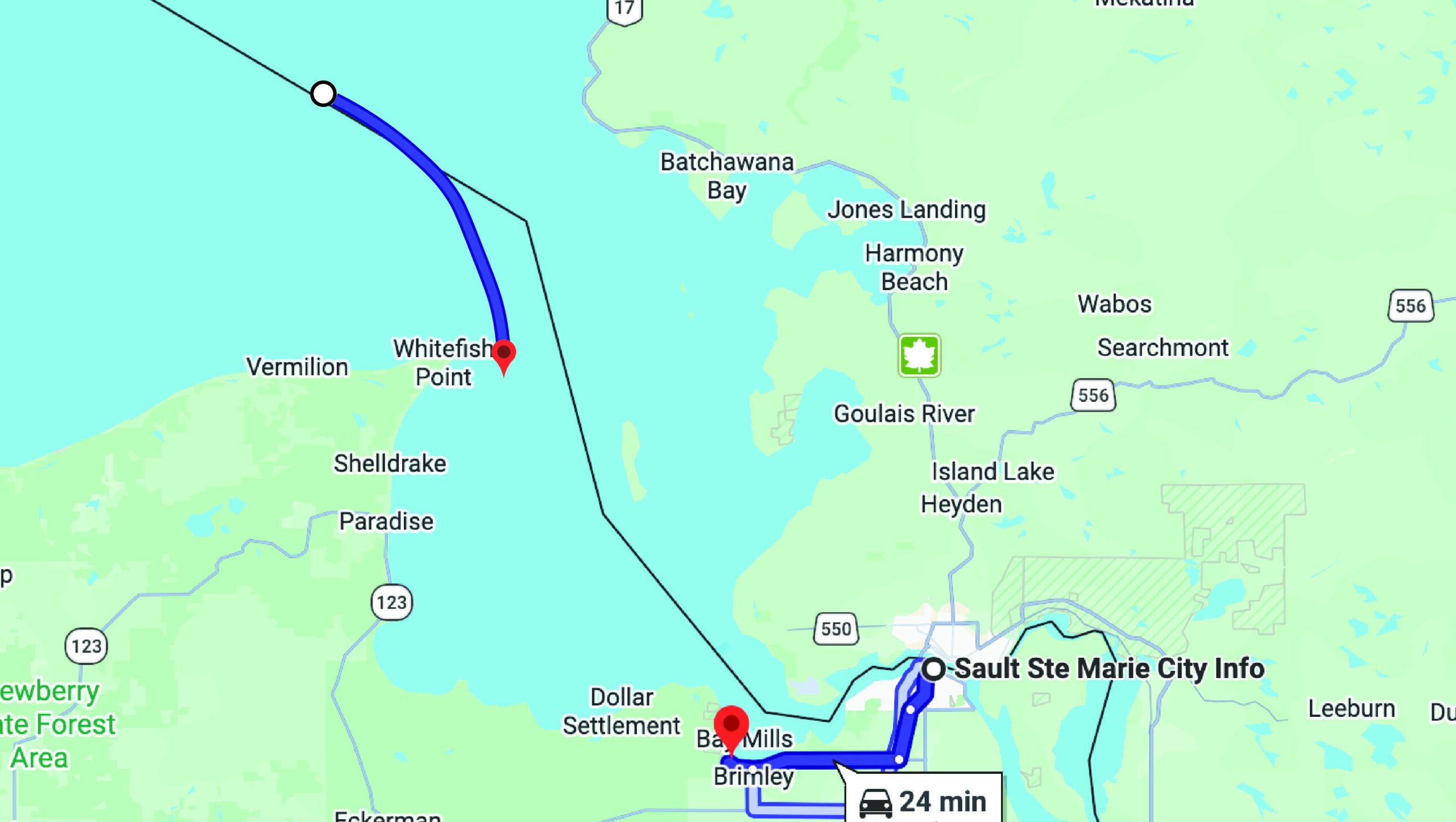
I’m sure you’ve heard she was only 17 miles from the entrance to Whitefish Bay. If you hopped in your car from City Hall in downtown Sault Ste. Marie out to Pickles in Brimley Michigan that 25-minute drive would roughly cover the distance Fitzgerald was from the entice of Whitefish Bay.
How Much Was She Hauling?
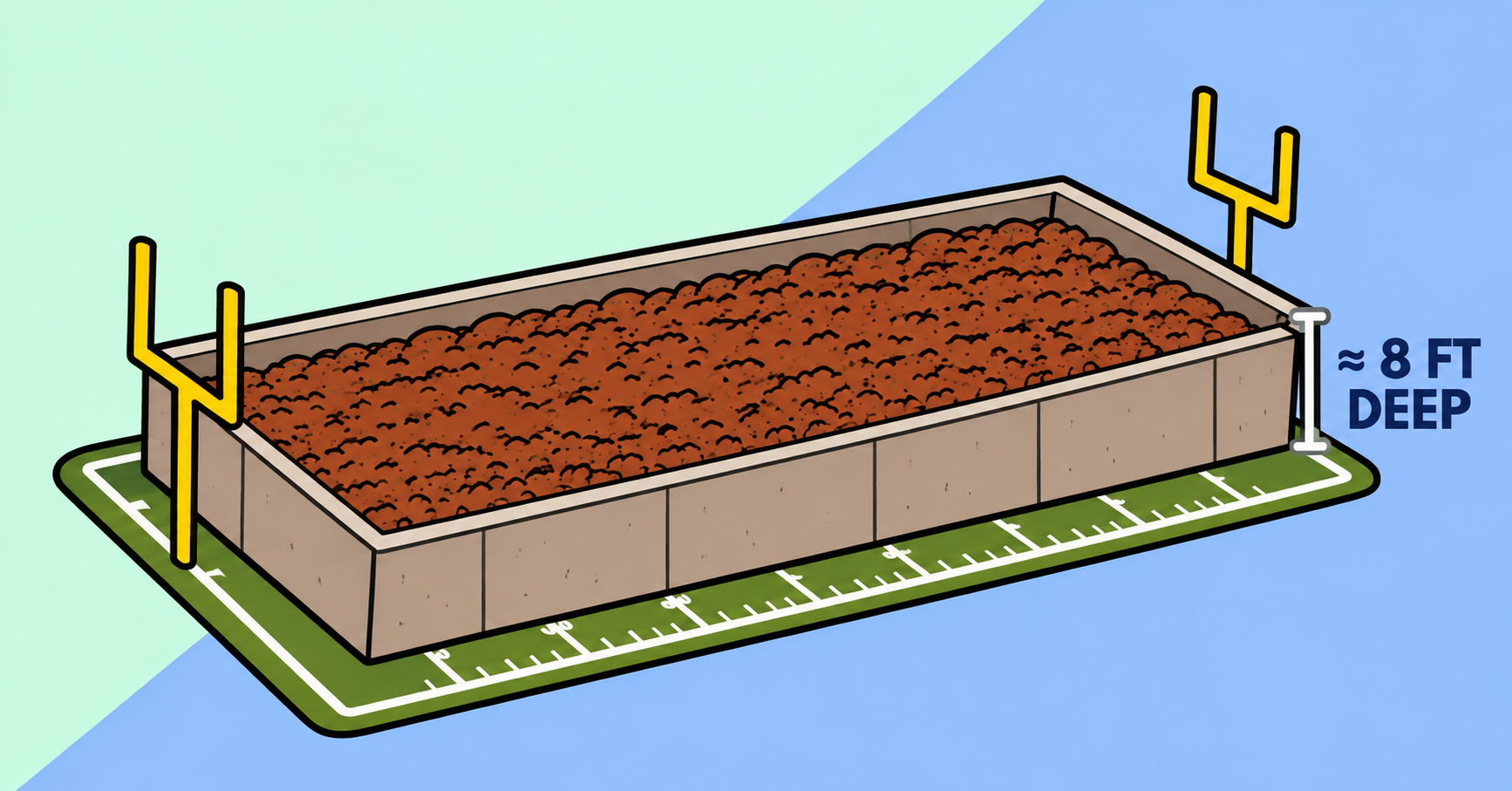
On her final voyage, the Edmund Fitzgerald was carrying more than 26,000 tons of taconite pellets, which are small balls of processed iron ore used to make steel. That’s nearly 58.5 million pounds of cargo!
But what does that actually look like? Imagine taking an entire football field, including both end zones, and building walls around it. If you poured all those taconite pellets into that space, they would cover the entire football field nearly 8 feet deep!
Sometimes looking at a familiar story from a new perspective can change the way we understand it. Of course, numbers and comparisons only tell part of the story. Beyond the size of the ship and the weight of its cargo is the loss of 29 crew members on November 10, 1975. More than 50 years later, the Edmund Fitzgerald remains an important part of Great Lakes history, and its crew continues to be remembered.
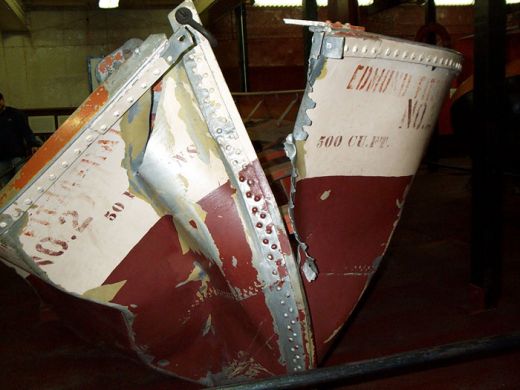
For those looking to learn more, the Great Lakes Shipwreck Museum at Whitefish Point tells the story of the Edmund Fitzgerald and displays the ship’s recovered bell. Right here in Sault Ste. Marie, Museum Ship Valley Camp also has exhibits dedicated to the tragedy, including two of the Fitzgerald’s lifeboats.